 WaterCalcLab
Irrigation Flow Rate Calculator
Use a timed bucket or meter measurement to calculate average flow.
Your result
Bars compare only results in the same unit group. They are normalized, not a time-series forecast.
Planning result based on your inputs.
How this tool works
Use a timed bucket or meter measurement to calculate average flow.
Q = measured volume/timeExample calculation
The prefilled form is a worked example. Its base-unit inputs and expected outputs are shown below; use the reset button to restore it.
| Input | Example |
|---|---|
| Water volume | 10000 |
| Runtime | 60 |
Planning notes for this calculator
Turn a timed bucket or meter observation into average flow. This is useful when a nominal tap, hose or emitter rating does not describe your actual installation.
Choose meaningful inputs
- Water volume
- Measure only the collected volume or meter increase during the timed test.
- Runtime
- Use the elapsed time. For a 30-second test choose 0.5 minutes, not 30 minutes.
Read the result correctly
Flow is collected volume divided by time. It is an average for the tested conditions, not a maximum guaranteed by the supply. Keep the same hose, valve setting and operating loads as the application you want to estimate. Repeat the test if pressure varies; compare the spread before choosing a representative rate.
Common mistakes to avoid
- Seconds and minutes are not interchangeable; check the time selector.
- An open-tap test does not prove the flow of a connected irrigation zone.
A useful next step
Use the measured flow in the runtime or fill-time calculator and retain the test date and operating conditions.
Follow a worked scenario
A separate illustrative scenario; these values do not change when you edit the form above.
- Collect 10 L over 30 seconds, which is 0.5 minutes.
- 10 ÷ 0.5 = 20 L/min, equivalent to 1,200 L/h.
Frequently asked questions
How can I improve a bucket measurement?
Use a container with a known volume, time the actual filling and repeat under similar conditions. A longer practical observation can reduce the relative effect of starting and stopping the timer.
Can I size a pipe from this result alone?
No. Pipe selection also needs pressure, friction, pipe length, elevation, fittings and simultaneous demand. This tool supplies a measured volume rate, not a hydraulic pipe design.
Continue your plan
Garden Water Requirement Calculator
Apply an ET?/Kc water balance for a garden hydrozone. ET? is a daily input, not calculated weather data.
Open calculator ↗Garden irrigationIrrigation Water Calculator
Convert a chosen net application depth into gross water volume with an explicit efficiency.
Open calculator ↗Garden irrigationDrip Irrigation Calculator
Calculate nominal zone flow and delivered volume from emitter count, measured emitter flow and runtime.
Open calculator ↗Related reading
 Costs & savings
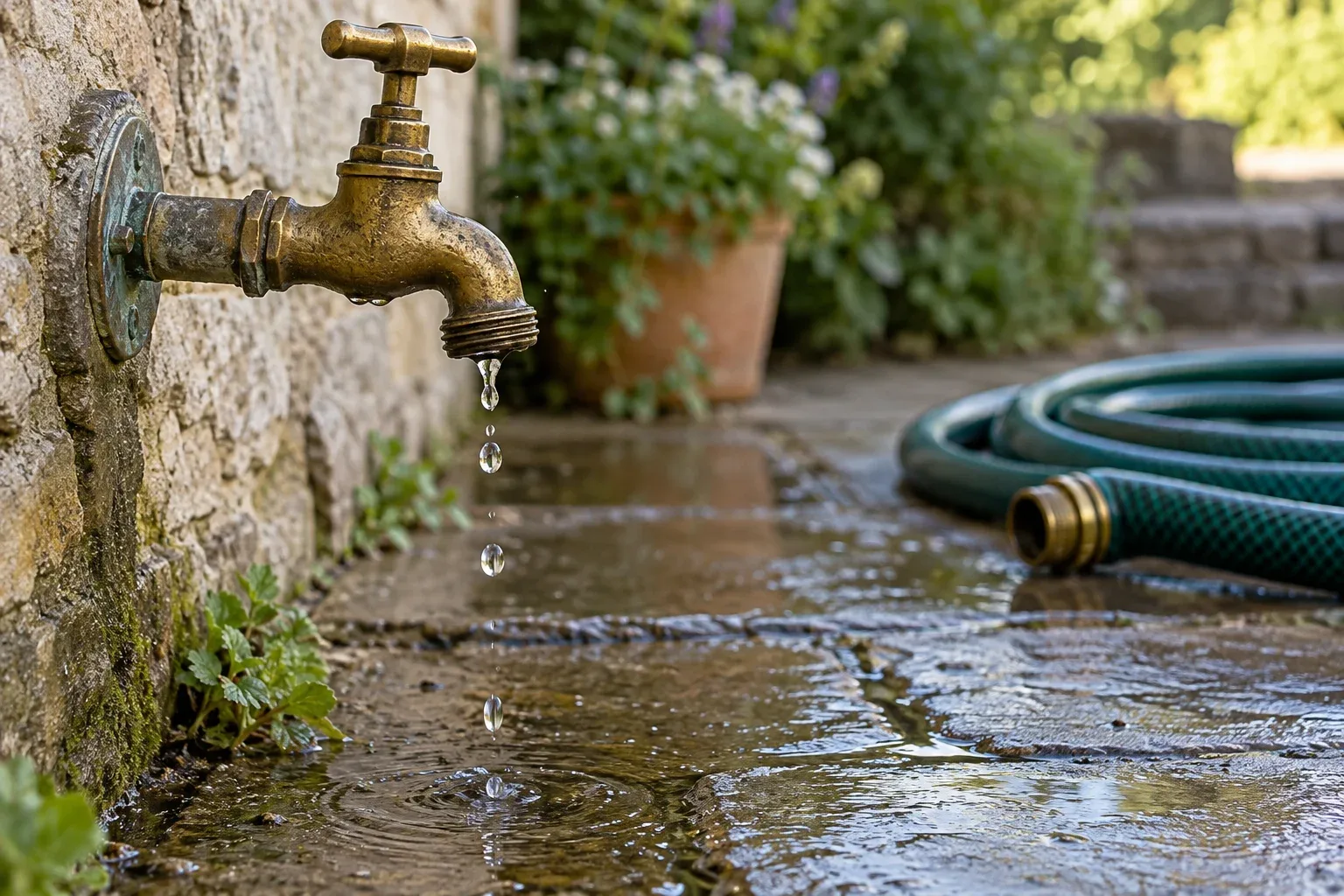
Common Water Waste Problems
Unexpected bills, damp areas, dripping fixtures and irrigation running after shutdown can signal unnecessary consumption. Start with an observation log including time and which equipment was operating. Avoid assuming every damp patch is a pipe leak; rainfall, drainage and other causes can produce similar symptoms. Investigate systematically before choosing a repair.
Read guide ↗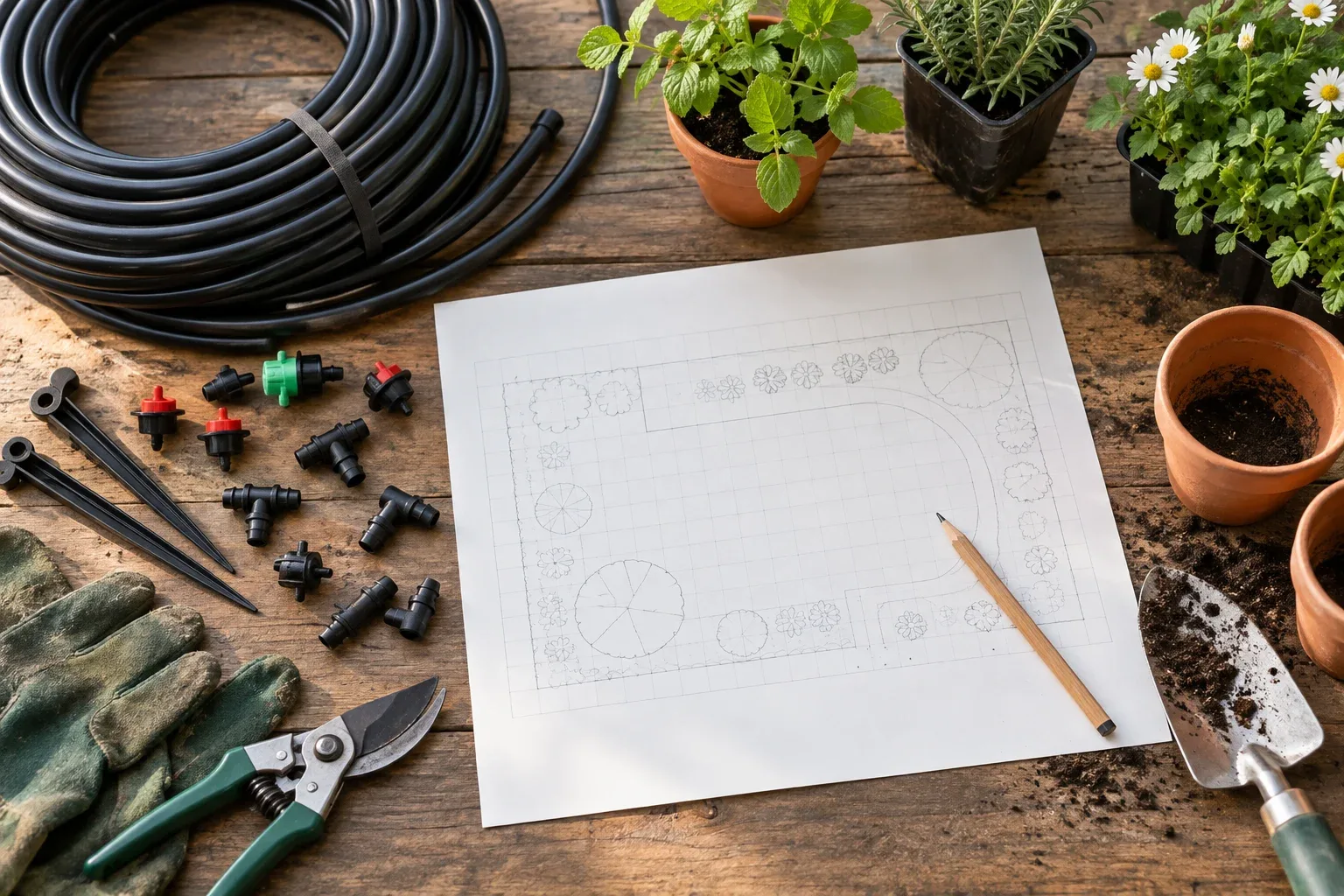 Garden irrigation
Common Irrigation Planning Mistakes
An area-based water volume is only the beginning. A working plan also needs outlet placement, operating pressure, flow, runtime and a watering window. Draw the route from source to each zone and note elevation changes. A calculator can produce a correct volume while the installation still fails to distribute it to the plants that require it.
Read guide ↗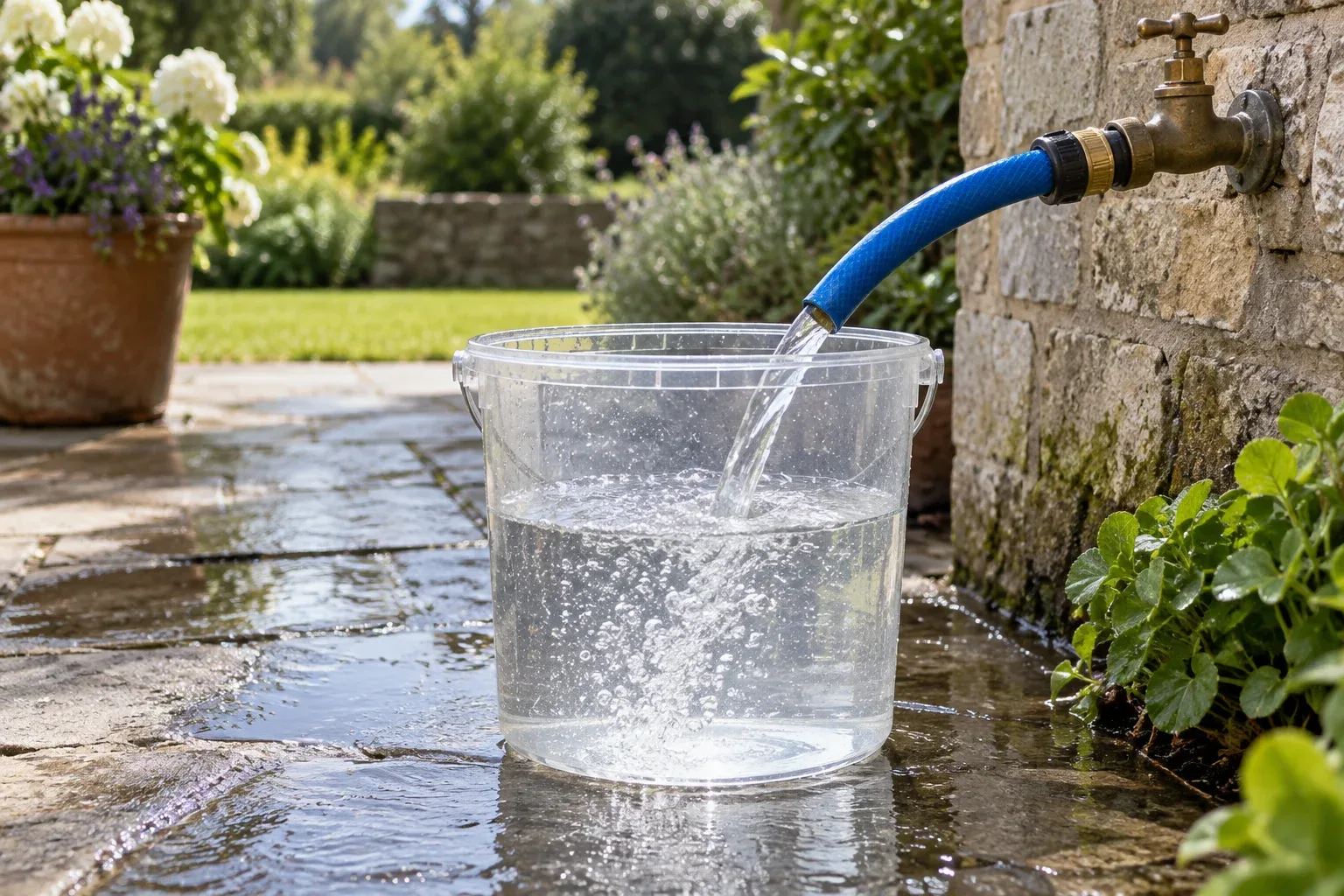 Garden irrigation
Understanding Irrigation Flow Rates
Flow rate tells you how quickly water moves, not whether plants need that amount or whether pressure is adequate. Keep litres per minute distinct from litres per hour. A zone total is the combined demand of the outlets operating together. Read product ratings at the stated operating pressure and do not assume every outlet reaches its label flow under every installation condition.
Read guide ↗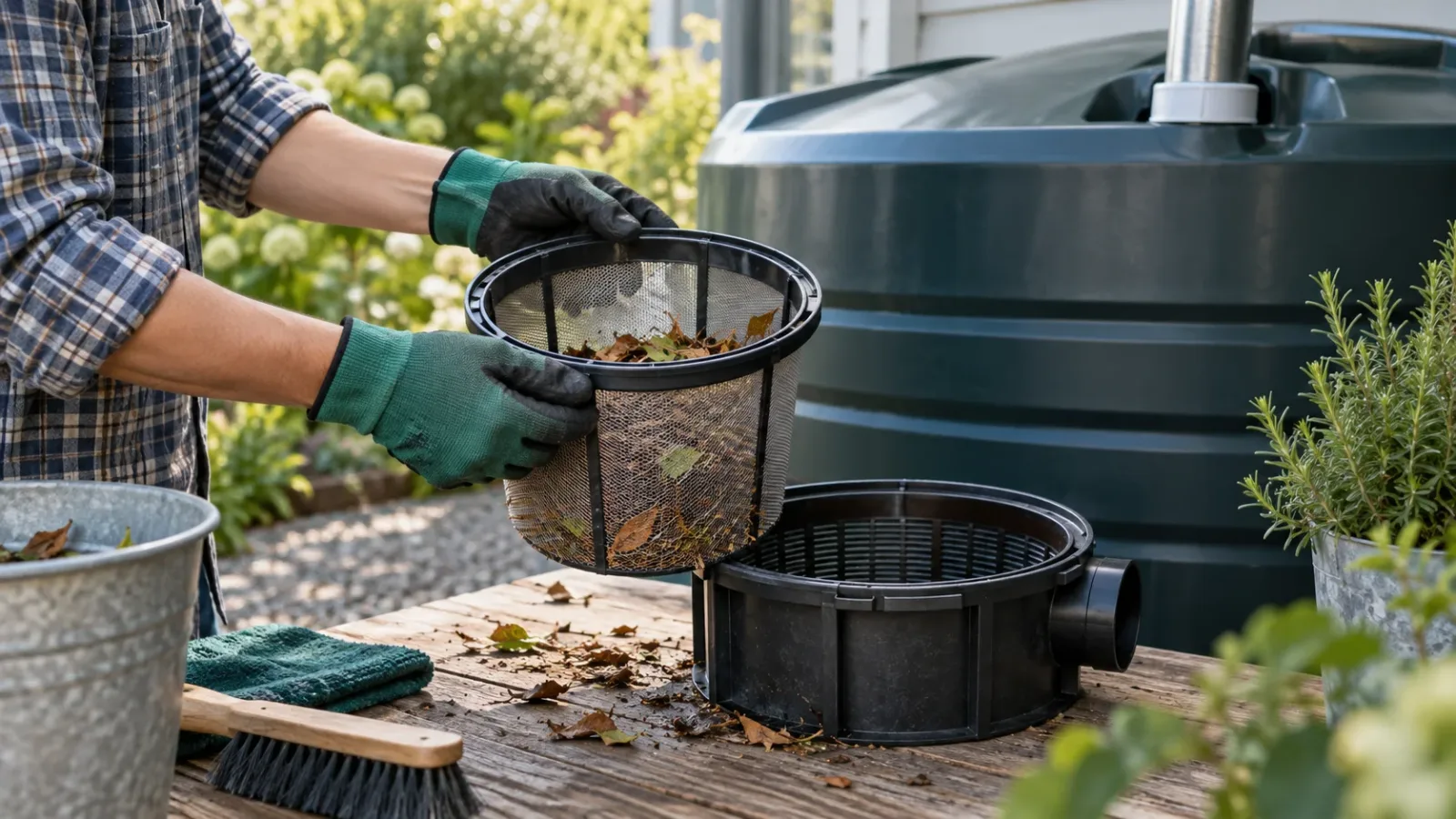 Water storage
Rainwater Tank Maintenance
List installed components, manufacturer instructions, inspection access and the person responsible for each task. Include the roof collection route, screens, tank, overflow, valves and delivery equipment. A maintenance plan should make a fault easy to identify and isolate. Follow product requirements rather than adopting an unsupported universal cleaning interval for every climate and use.
Read guide ↗Sources & method references
- US EPA WaterSense: Watering tips
Practical observation and watering context, not a universal dose or a local schedule.
- US Department of Energy: Improving pumping system performance
Pump and system curves, head and efficiency; an energy balance alone does not select equipment.
Method version 1.1 · Example documentation dated: 2026-10-11