WaterCalcLab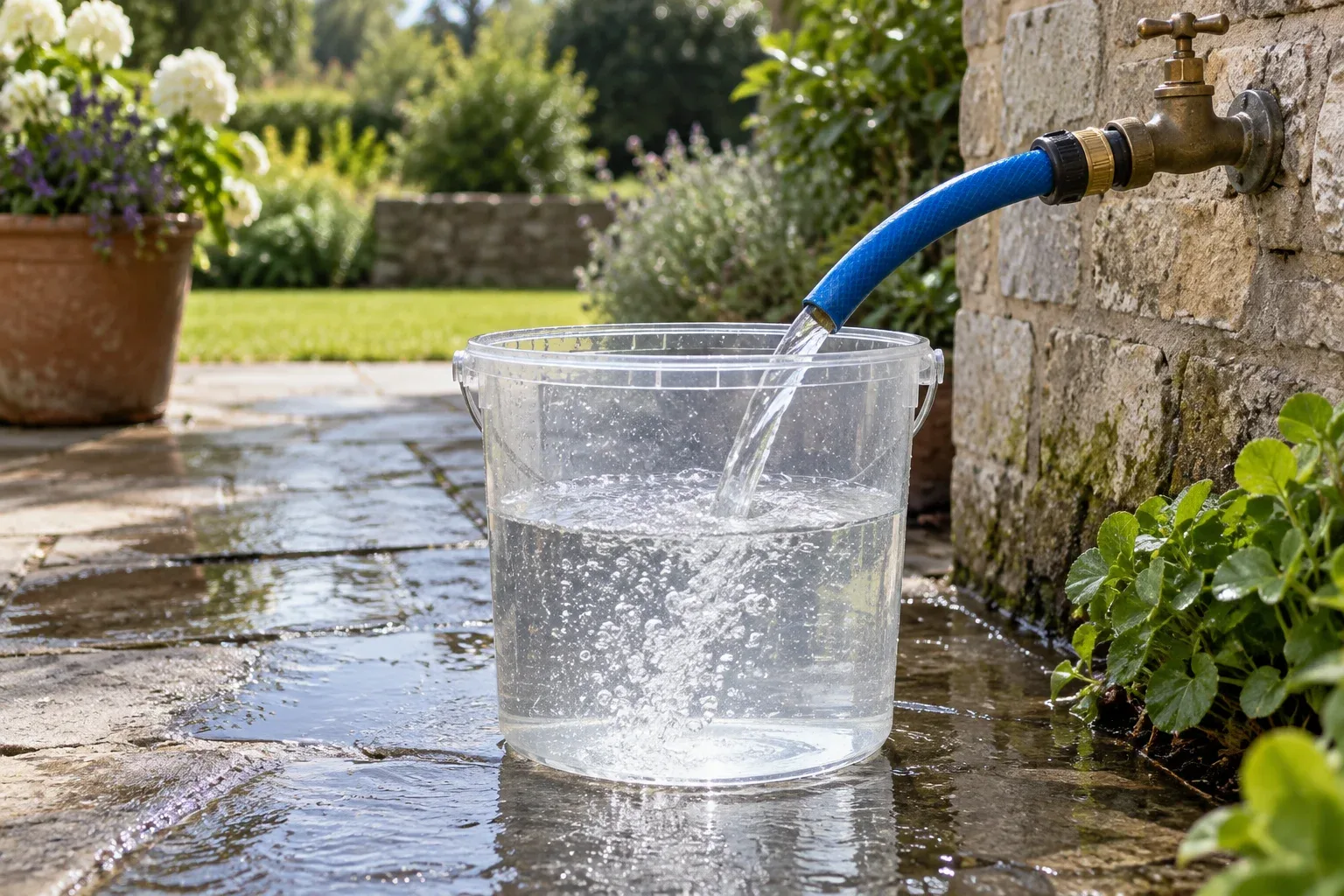
Flow is volume per time
Flow rate tells you how quickly water moves, not whether plants need that amount or whether pressure is adequate. Keep litres per minute distinct from litres per hour. A zone total is the combined demand of the outlets operating together. Read product ratings at the stated operating pressure and do not assume every outlet reaches its label flow under every installation condition.
Measure available supply under use
Time a known container at the relevant outlet, repeating the measurement. A static pressure reading taken with the tap closed cannot establish flowing delivery. Other household withdrawals may change available supply. For design work, measure or obtain the pressure and flow conditions needed by the selected equipment, including the effect of pipes, filters and elevation.
Available flow still needs to be checked at the required operating pressure.
12 L in 45 seconds; each emitter nominally 2 L/hour.
A simple measurement and conversion
If 12 litres take 45 seconds to collect, flow is 12 ÷ 45 × 60 = 16 litres per minute, or 960 litres per hour. Supplying 240 litres would take 15 minutes at that unchanged flow. If the container measurement is inaccurate by a litre, the estimated rate changes by about 1.33 litres per minute, showing why a known volume matters.
Add outlets that operate simultaneously
An illustrative drip zone with 60 outlets each delivering 2 litres per hour demands 120 litres per hour, equal to 2 litres per minute. Four such zones running together demand 8 litres per minute before any additional uses. Sequential operation may keep demand within supply, but the total daily watering window must still be sufficient for all zones.
Do not infer pump power from flow alone
Pump selection also needs required head, delivery pressure, losses, source conditions and the pump curve. The flow arithmetic does not certify a pump or predict operating performance. A measured bucket flow at a tap may not describe the conditions at the farthest emitter. Recheck representative outlets after installation rather than relying solely on the supply measurement.
Flow-rate checklist
- Write volume and time units.
- Repeat a known-container test.
- Measure under realistic competing use.
- Sum simultaneous outlets.
- Verify operating pressure.
- Consider the farthest outlet.
- Separate hydraulic design from volume arithmetic.
- Check the completed zone rather than only the source.