 WaterCalcLab
Garden Water Requirement Calculator
Apply an ET?/Kc water balance for a garden hydrozone. ET? is a daily input, not calculated weather data.
Your result
Bars compare only results in the same unit group. They are normalized, not a time-series forecast.
Planning result based on your inputs.
How this tool works
Apply an ET₀/Kc water balance for a garden hydrozone. ET₀ is a daily input, not calculated weather data.
Dnet = max(0, ET₀ × Kc × days − effective rain); Vgross = A × Dnet/ηExample calculation
The prefilled form is a worked example. Its base-unit inputs and expected outputs are shown below; use the reset button to restore it.
| Input | Example |
|---|---|
| Area | 100 |
| Reference evapotranspiration ET₀ per day | 4 |
| Crop coefficient Kc | 0.8 |
| Days | 21 |
| Effective rain for the period | 5 |
| System efficiency (separate losses) | 0.9 |
Frequently asked questions
How should I choose the inputs?
Use measurements and local records for the stated period. All preset values are illustrative examples, not recommendations.
What does this result leave out?
Simplified water balance, not a crop prescription. Supply local ET₀, a crop/stage-specific Kc and effective rainfall. It excludes capillary rise, soil storage changes, salinity and distribution non-uniformity.
Continue your plan
Irrigation Water Calculator
Convert a chosen net application depth into gross water volume with an explicit efficiency.
Open calculator ↗Garden irrigationDrip Irrigation Calculator
Calculate nominal zone flow and delivered volume from emitter count, measured emitter flow and runtime.
Open calculator ↗Garden irrigationSprinkler Runtime Calculator
Estimate runtime using the measured total flow of one zone and a chosen net dose.
Open calculator ↗Related reading
 Garden irrigation
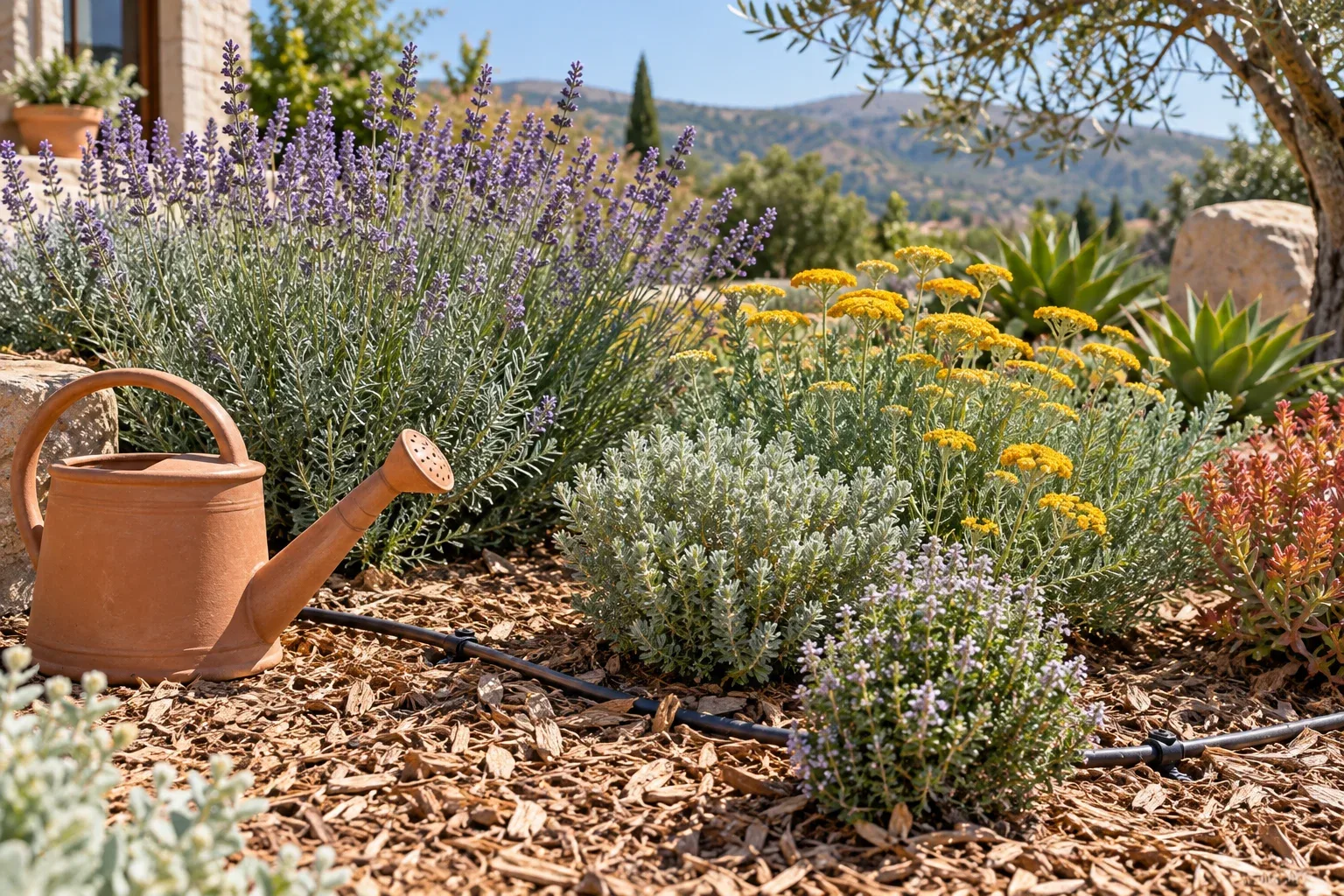
How to Reduce Garden Water Consumption
Record watering events, measured flow and runtime by zone. Note rainfall, weather and plant condition. A bill for the whole house mixes garden use with other consumption, so a submeter or event log can be useful. Establish which zones consume most before buying hardware; a small low-use bed offers less volume-saving opportunity than a poorly controlled large zone.
Read guide ↗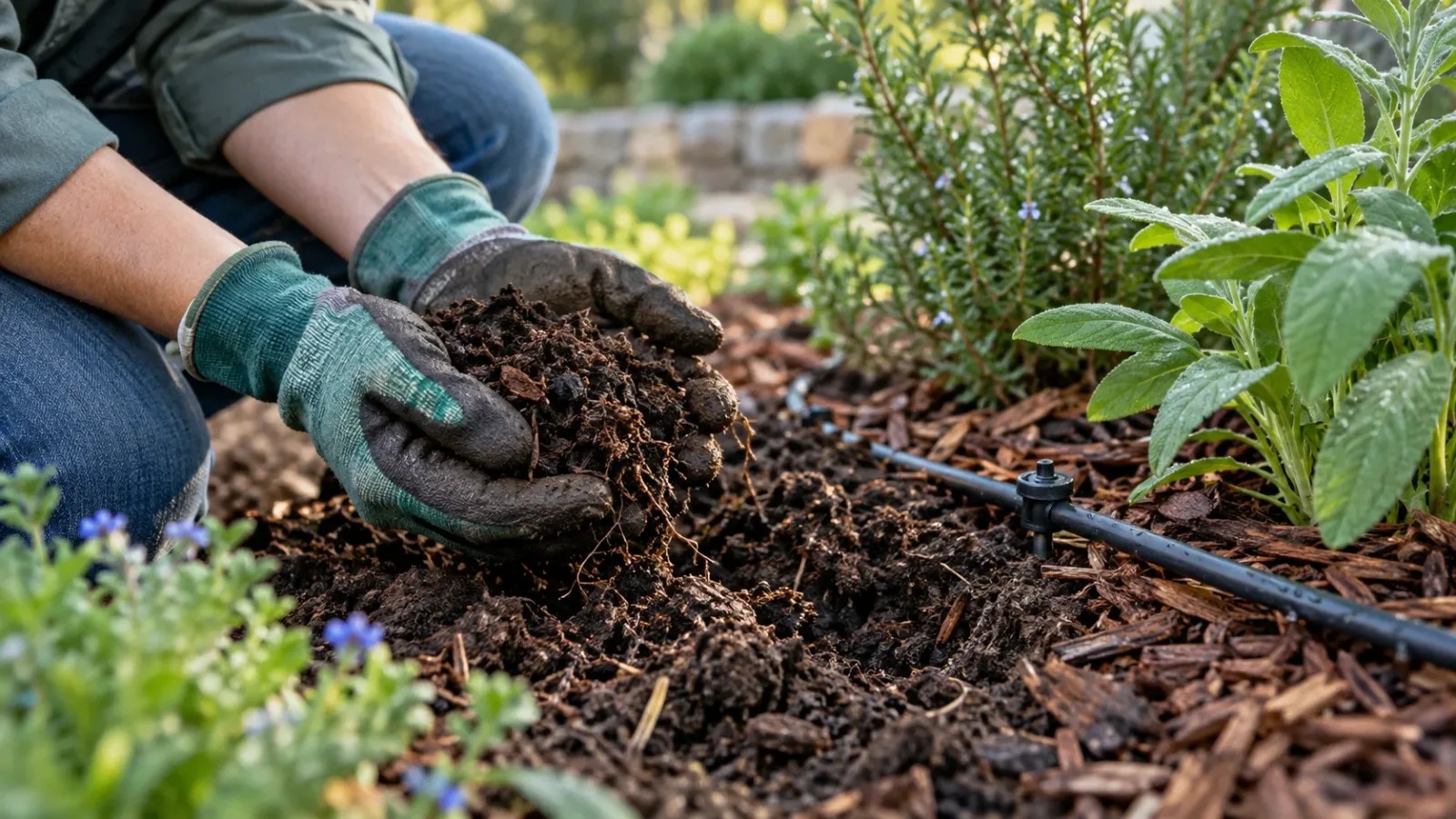 Garden irrigation
Watering Different Soil Types
Texture helps describe water retention and movement, but rooting depth, compaction, organic matter, slope and current wetness also matter. Identify the soil in each relevant bed rather than assuming the whole property is uniform. Use observation or appropriate testing. A soil label alone cannot justify an exact interval for every plant and weather condition.
Read guide ↗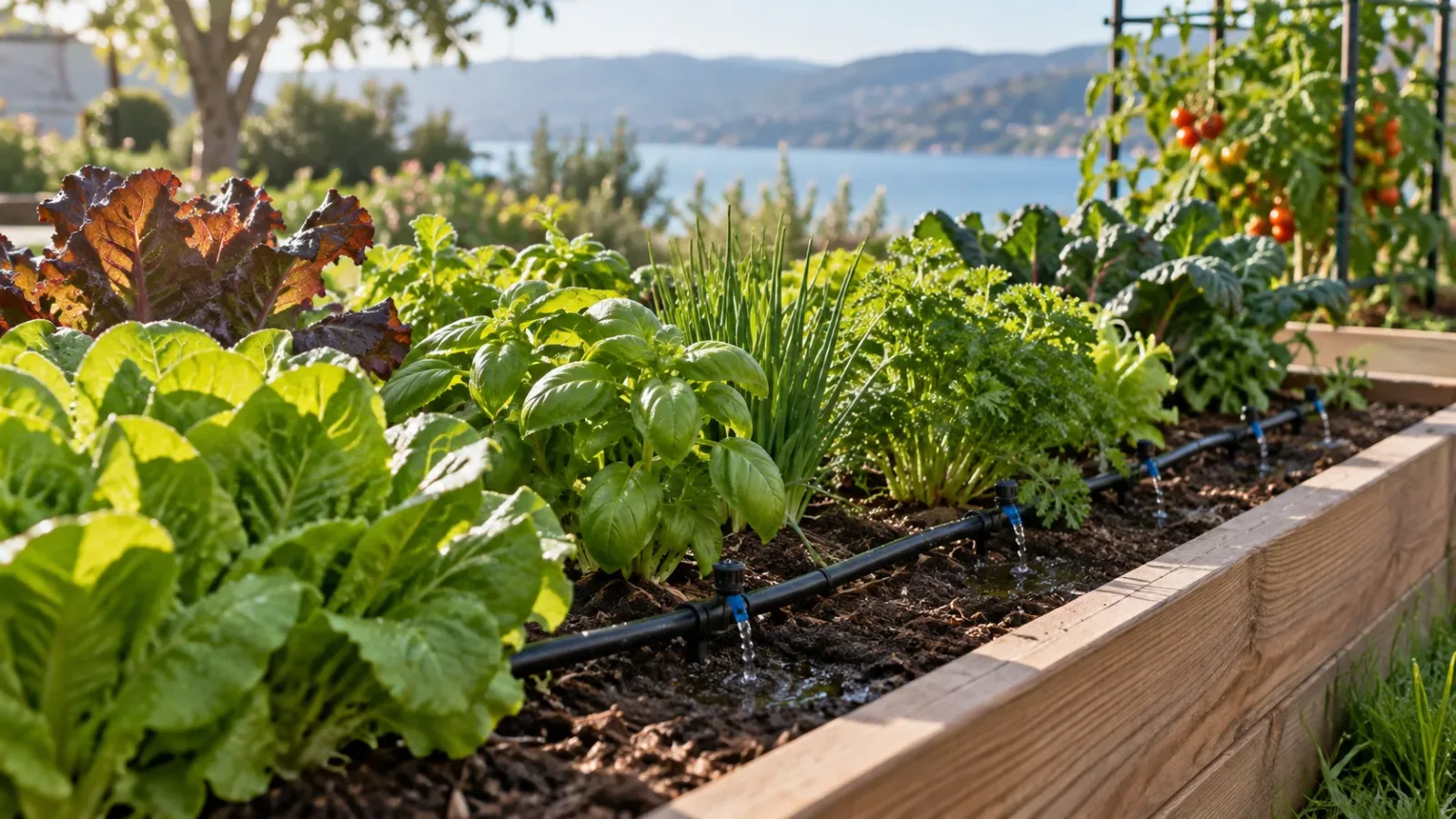 Garden irrigation
How Much Water Does a Garden Need?
Measure the beds actually being irrigated and choose a period such as one week. Exclude paved paths from the watered area unless overspray is being measured as a loss. Separate plants with different needs rather than applying one garden-wide depth without explanation. A container, vegetable bed and mature shrub zone may need different schedules even on the same property.
Read guide ↗Sources & method references
Method version 1.0 · Last reviewed: 2026-10-10