 WaterCalcLab
Irrigation Water Calculator
Convert a chosen net application depth into gross water volume with an explicit efficiency.
Your result
Bars compare only results in the same unit group. They are normalized, not a time-series forecast.
Planning result based on your inputs.
How this tool works
Convert a chosen net application depth into gross water volume with an explicit efficiency.
Vnet = area × depth; Vgross = Vnet/ηExample calculation
The prefilled form is a worked example. Its base-unit inputs and expected outputs are shown below; use the reset button to restore it.
| Input | Example |
|---|---|
| Area | 100 |
| Target net water depth | 20 |
| System efficiency (separate losses) | 0.9 |
Planning notes for this calculator
Convert an already selected irrigation depth into the water volume needed for one zone. This helps compare equipment delivery with a crop-and-soil water target.
Choose meaningful inputs
- Area
- Measure the area actually receiving this dose; exclude paths and unwatered sections.
- Target net water depth
- Choose the net depth needed in the root zone for this application or period. One mm over one m² equals one litre.
- System efficiency (separate losses)
- Enter the share of delivered water retained for the intended irrigation use. A lower fraction requires more supplied water.
Read the result correctly
Net litres are the amount intended to remain useful over the area. Gross litres are the amount to deliver under the chosen efficiency assumption. Dividing by a fraction below one increases gross demand. Neither value determines whether the chosen dose suits the plants or whether it can infiltrate without runoff.
Common mistakes to avoid
- Enter net depth, not a gross dose that already includes the same losses.
- Changing efficiency changes delivery volume; it does not change the underlying root-zone target.
A useful next step
Measure zone flow and use the sprinkler runtime tool, or compare the gross volume with measured drip delivery.
Follow a worked scenario
A separate illustrative scenario; these values do not change when you edit the form above.
- 50 m² × 12 mm = 600 L net water.
- 600 ÷ 0.80 = 750 L delivered; 150 L is the assumed difference between delivered and useful water.
Frequently asked questions
Is 20 mm a recommended irrigation dose?
No. A preset is an example. Select net depth from root-zone moisture, soil storage, crop needs and recent effective rainfall, then use this tool for the volume conversion.
How do I estimate runtime from the litres?
Divide gross litres by measured litres per minute for the zone. If pressure or flow changes while watering, one constant-flow estimate may not describe the full application.
Continue your plan
Garden Water Requirement Calculator
Apply an ET?/Kc water balance for a garden hydrozone. ET? is a daily input, not calculated weather data.
Open calculator ↗Garden irrigationDrip Irrigation Calculator
Calculate nominal zone flow and delivered volume from emitter count, measured emitter flow and runtime.
Open calculator ↗Garden irrigationSprinkler Runtime Calculator
Estimate runtime using the measured total flow of one zone and a chosen net dose.
Open calculator ↗Related reading
 Garden irrigation
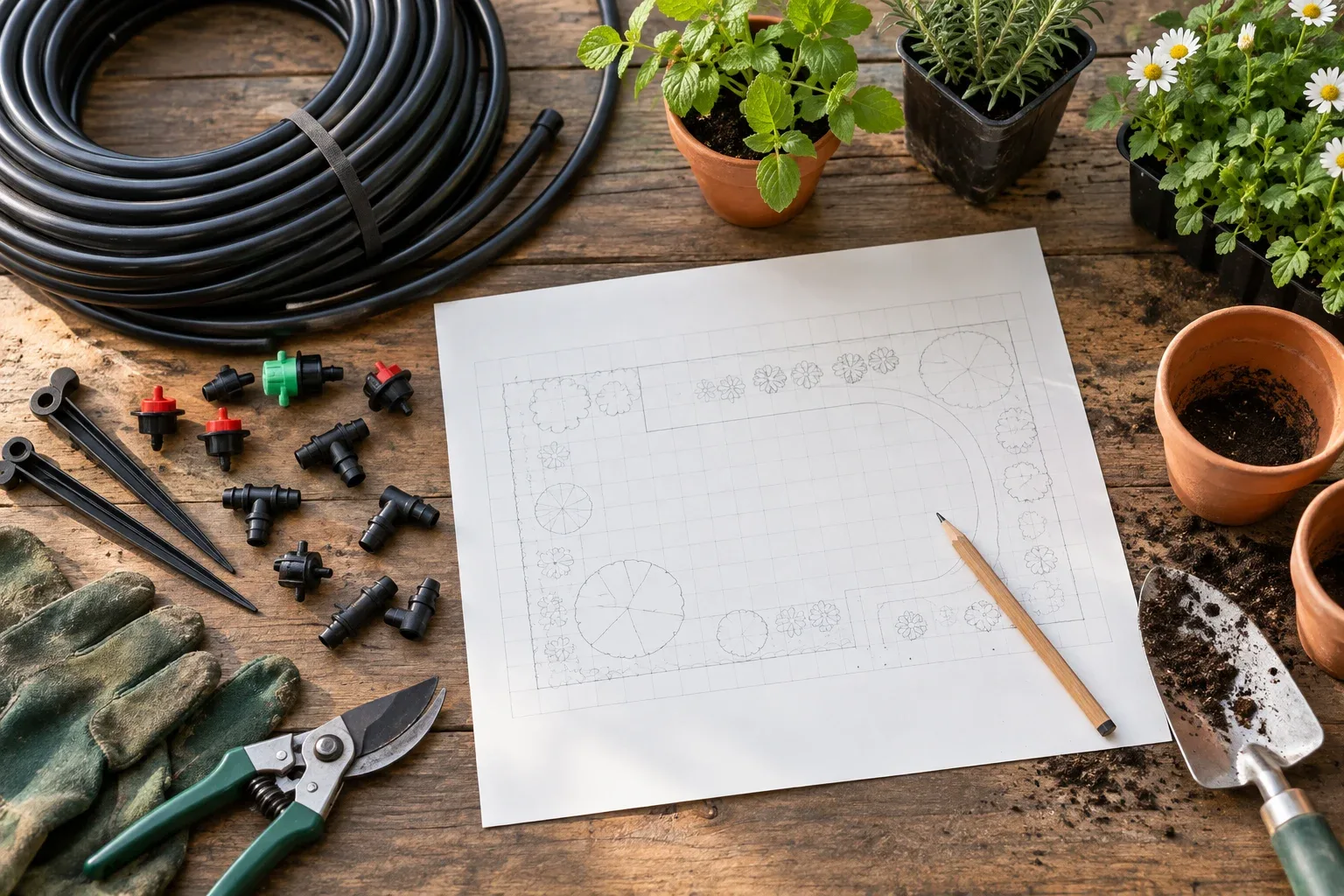
Common Irrigation Planning Mistakes
An area-based water volume is only the beginning. A working plan also needs outlet placement, operating pressure, flow, runtime and a watering window. Draw the route from source to each zone and note elevation changes. A calculator can produce a correct volume while the installation still fails to distribute it to the plants that require it.
Read guide ↗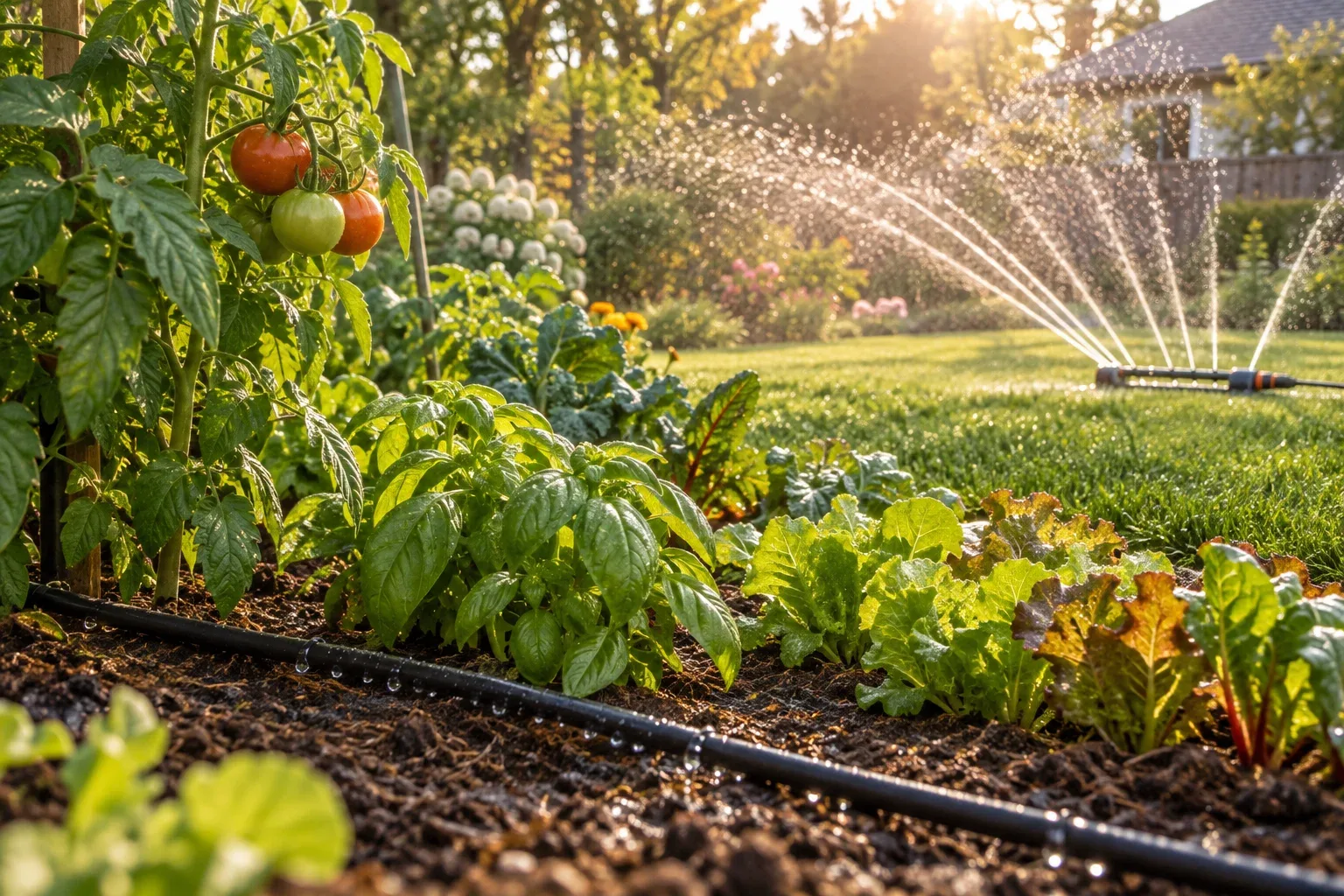 Garden irrigation
Drip Irrigation vs Sprinklers
Compare methods for the same planted area and required root-zone water. Drip can suit rows and individual plants; sprinklers can serve continuous areas where their distribution is appropriate. The comparison should include installation, filtration, pressure, maintenance and how planting changes over time. Do not select a method by quoting a universal savings percentage detached from the actual site.
Read guide ↗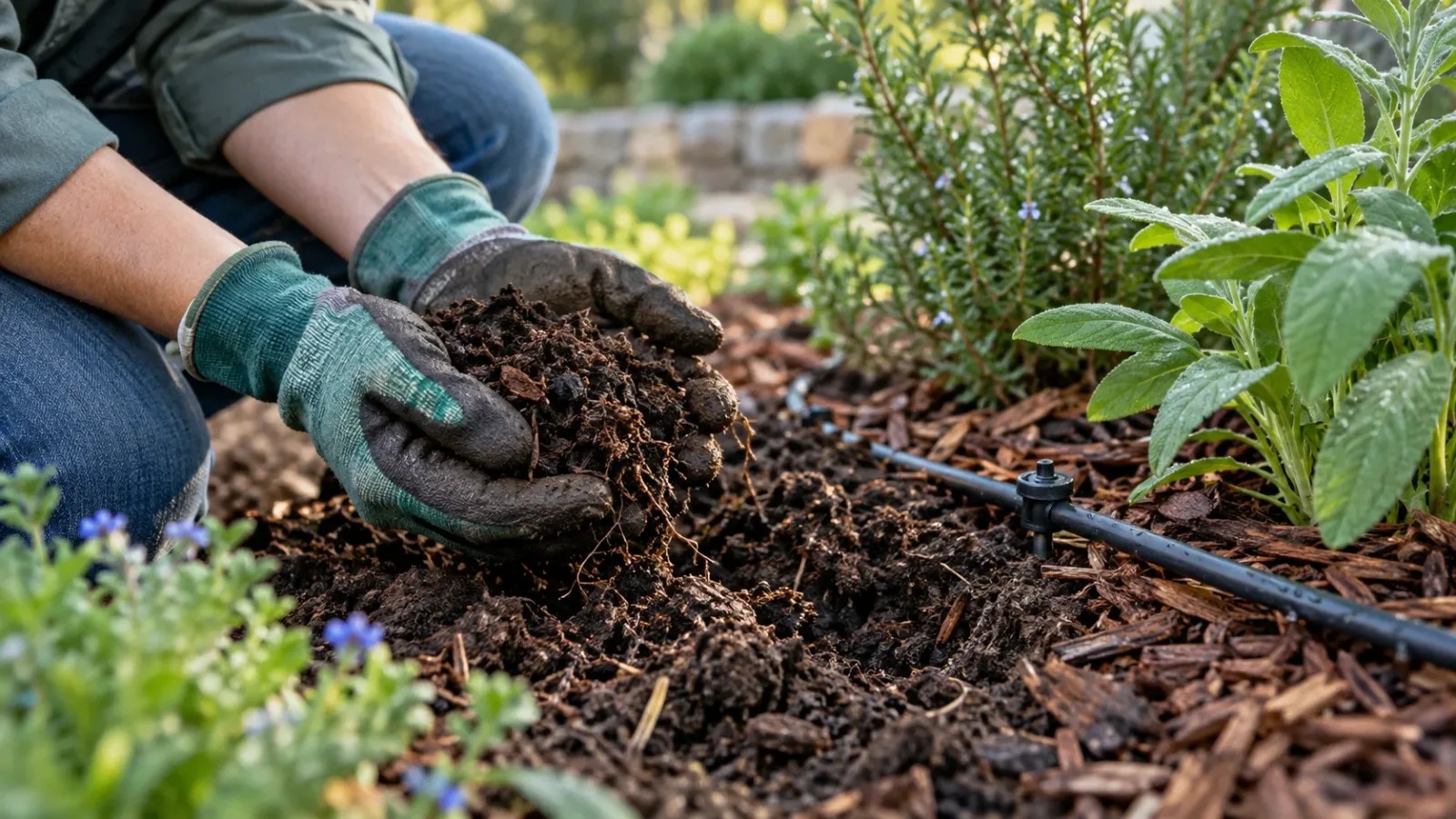 Garden irrigation
Watering Different Soil Types
Texture helps describe water retention and movement, but rooting depth, compaction, organic matter, slope and current wetness also matter. Identify the soil in each relevant bed rather than assuming the whole property is uniform. Use observation or appropriate testing. A soil label alone cannot justify an exact interval for every plant and weather condition.
Read guide ↗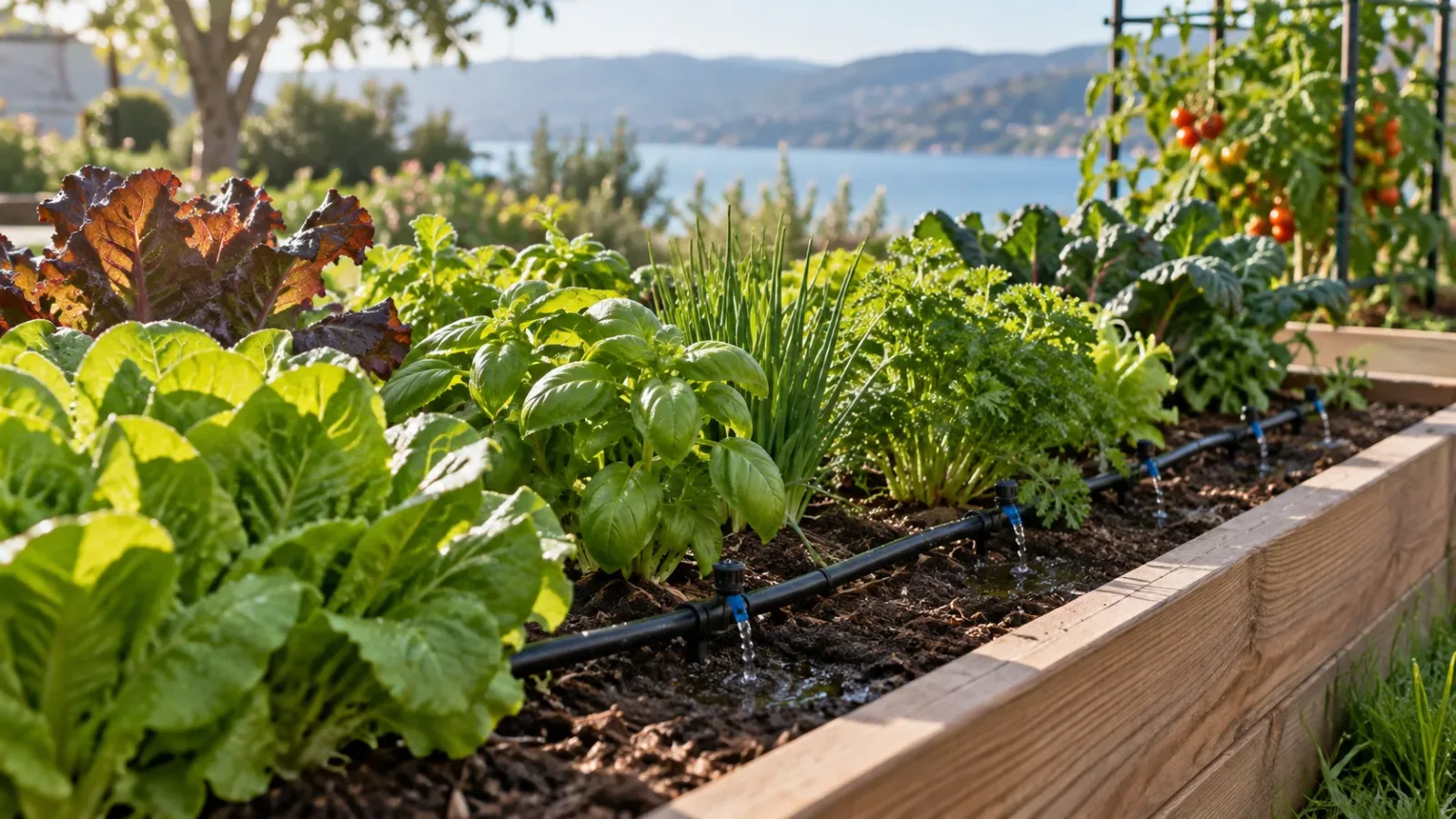 Garden irrigation
How Much Water Does a Garden Need?
Measure the beds actually being irrigated and choose a period such as one week. Exclude paved paths from the watered area unless overspray is being measured as a loss. Separate plants with different needs rather than applying one garden-wide depth without explanation. A container, vegetable bed and mature shrub zone may need different schedules even on the same property.
Read guide ↗Sources & method references
- FAO-56, Chapter 8: Soil water balance
Root-zone storage, allowable depletion and water-balance assumptions; our model is a simplified planning calculation.
- US EPA WaterSense: Watering tips
Practical observation and watering context, not a universal dose or a local schedule.
Method version 1.1 · Explanations and examples reviewed: 2026-10-11