 WaterCalcLab
Rainwater Harvesting Calculator
Estimate catchment yield from horizontal roof area and period rainfall. One millimetre on one square metre is one litre.
Your result
Bars compare only results in the same unit group. They are normalized, not a time-series forecast.
Planning result based on your inputs.
How this tool works
Estimate catchment yield from horizontal roof area and period rainfall. One millimetre on one square metre is one litre.
V = A × P; Vusable = V × C × ηExample calculation
The prefilled form is a worked example. Its base-unit inputs and expected outputs are shown below; use the reset button to restore it.
| Input | Example |
|---|---|
| Area | 100 |
| Rainfall for the selected period | 600 |
| Roof material (context only) | Tile |
| Roof runoff coefficient | 0.85 |
| System efficiency (separate losses) | 0.9 |
Frequently asked questions
How should I choose the inputs?
Use measurements and local records for the stated period. All preset values are illustrative examples, not recommendations.
What does this result leave out?
Annual or event yield is not the volume actually used. Overflow, timing, first-flush and water quality need separate assessment. Roof and downstream losses must not overlap. Roof material does not automatically set a universal coefficient.
Continue your plan
Roof Rainwater Collection Calculator
Measure the horizontal roof footprint draining to the connected downpipes, not the sloping roof surface.
Open calculator ↗Rainwater harvestingRain Barrel Calculator
Estimate how many empty barrels could contain one specified rainfall event.
Open calculator ↗Related reading
 Water storage
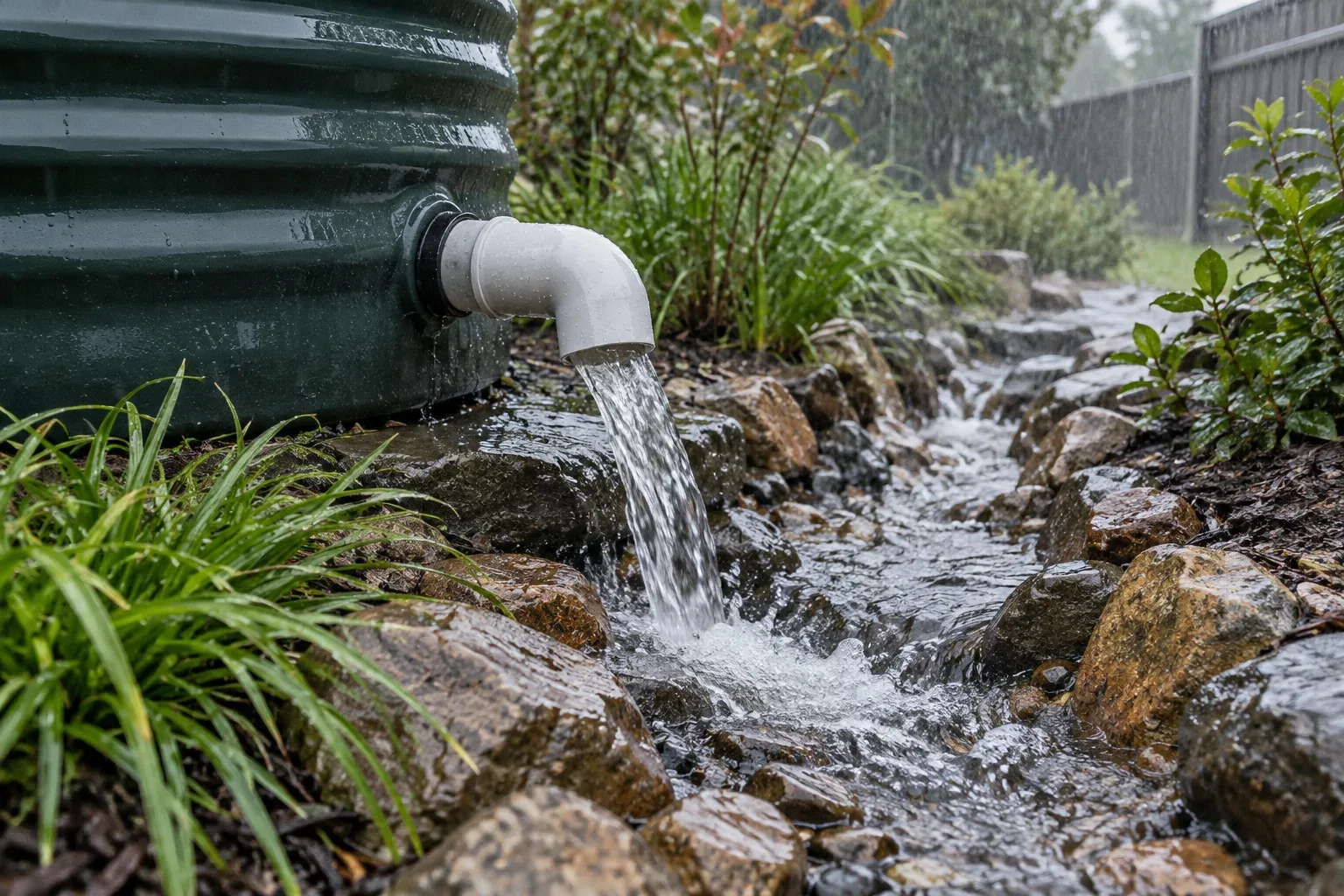
Understanding Rainwater Overflow
A collection system needs somewhere for incoming water to go after the tank reaches its operating limit. Plan that route from the start rather than treating every overflow as a malfunction. Distinguish a full-tank overflow from water escaping at a blocked gutter or inlet; the latter can occur even while substantial storage space remains available.
Read guide ↗ Rainwater harvesting
Rainwater Harvesting for Small Homes
For a small property, accessibility and a modest, regular demand often matter more than a large annual yield. Start with the beds or containers you genuinely water. Sketch walking routes, door clearance and the hose path. A barrel that blocks access or is awkward to empty may receive rain while contributing little useful water to daily gardening.
Read guide ↗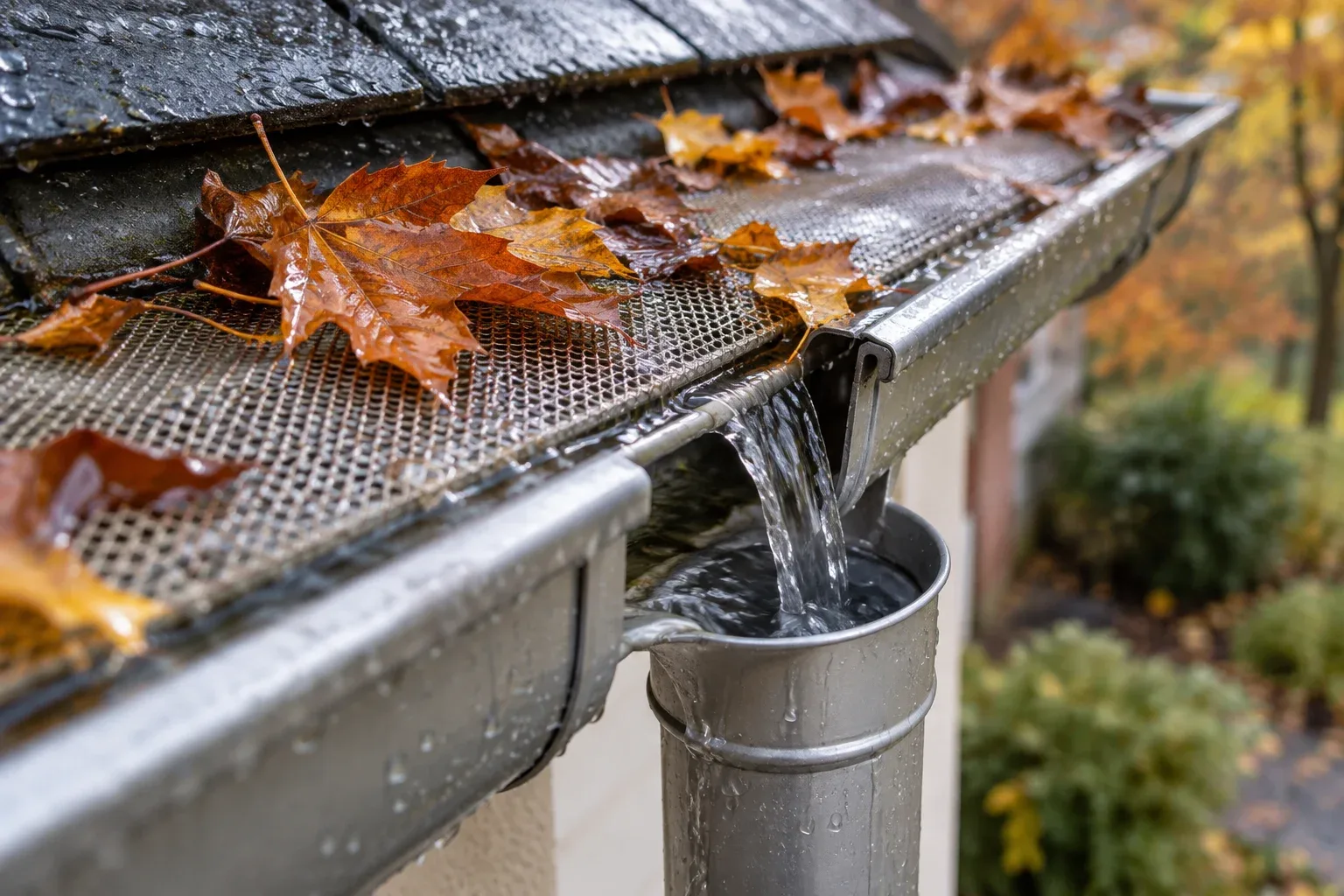 Rainwater harvesting
Rainwater Collection Efficiency Explained
An efficiency value needs a beginning and an end. Roof runoff relative to rainfall is different from tank inflow relative to roof runoff, and both differ from useful withdrawals relative to annual rainfall. Write the boundary beside every coefficient. Without that description, two apparently conflicting percentages may simply describe different stages of the same system.
Read guide ↗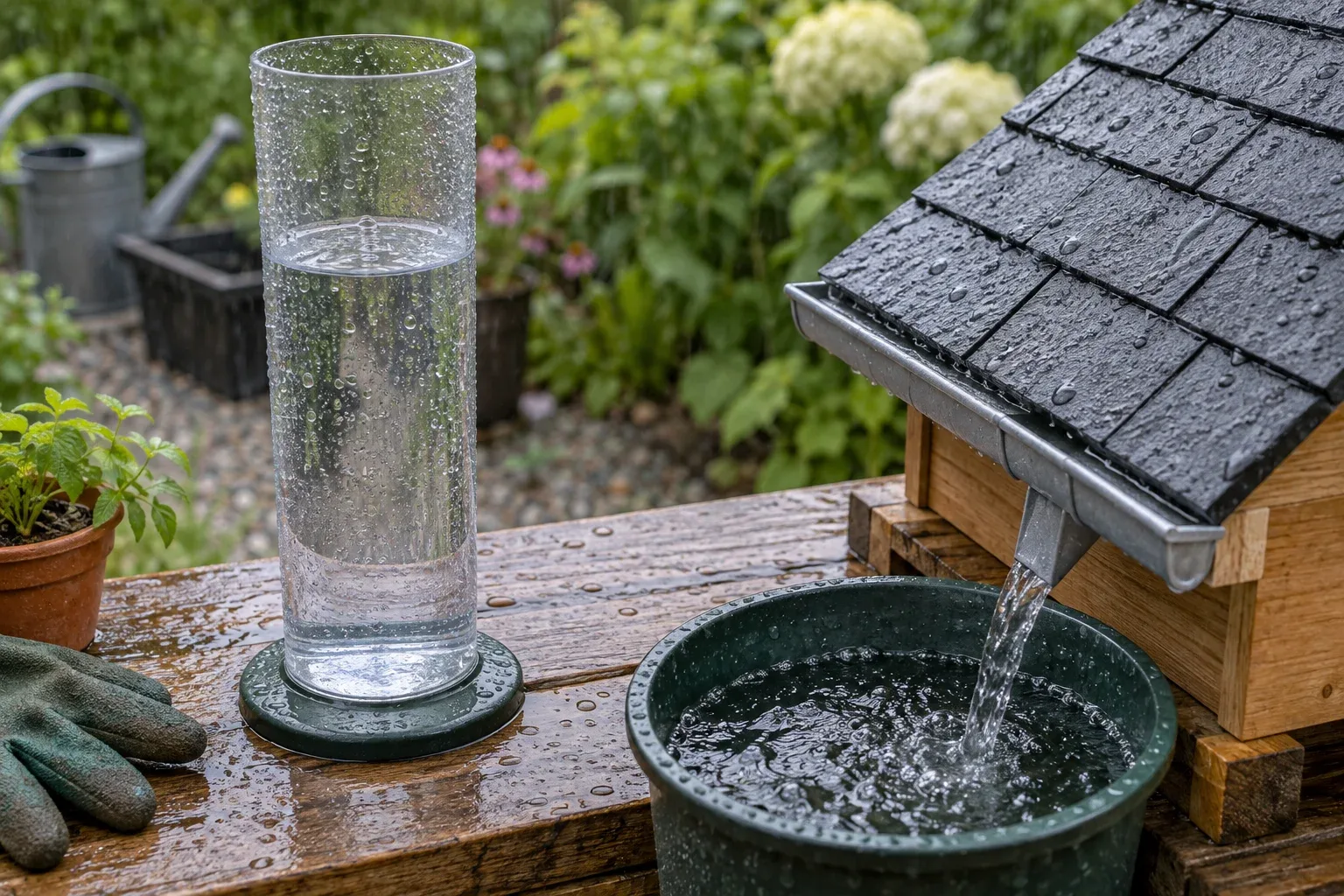 Rainwater harvesting
How Much Rainwater Can You Collect?
Specify whether you want the potential from one storm, one month or one year. Each question needs rainfall covering that same period. An annual total is useful for screening a project, but it cannot tell you whether a tank is full during a particular dry week. Keep the rainfall source, location, period and measurement unit with the result.
Read guide ↗ Rainwater harvesting
Rainwater Harvesting in Dry Climates
In a dry climate, a useful annual rainfall total can still arrive in a few events separated by long rainless periods. Describe the longest relevant gap and which uses must continue through it. Decide whether rainwater is a supplemental source or a supply expected to meet essential demand. These two objectives lead to very different acceptable risks and storage requirements.
Read guide ↗ Rainwater harvesting
Best Roof Types for Rainwater Collection
The best roof for a project is not necessarily the roof with the highest estimated runoff. Start with its condition, maintenance access, material documentation and intended water use. Replacing a serviceable roof solely to increase yield requires a separate financial and environmental comparison. Collection equipment should not conceal a deteriorating roof or prevent necessary repairs.
Read guide ↗ Rainwater harvesting
How Rainwater Harvesting Works
A rainwater system is easiest to understand as a route with checkpoints. Identify the connected roof, follow each gutter to its downpipe, locate the inlet and then trace the outlet to the watering point. A large roof disconnected from the tank contributes nothing. Draw this route before comparing storage products; it often exposes the missing connection that changes a project.
Read guide ↗Sources & method references
Method version 1.0 · Last reviewed: 2026-10-10