WaterCalcLab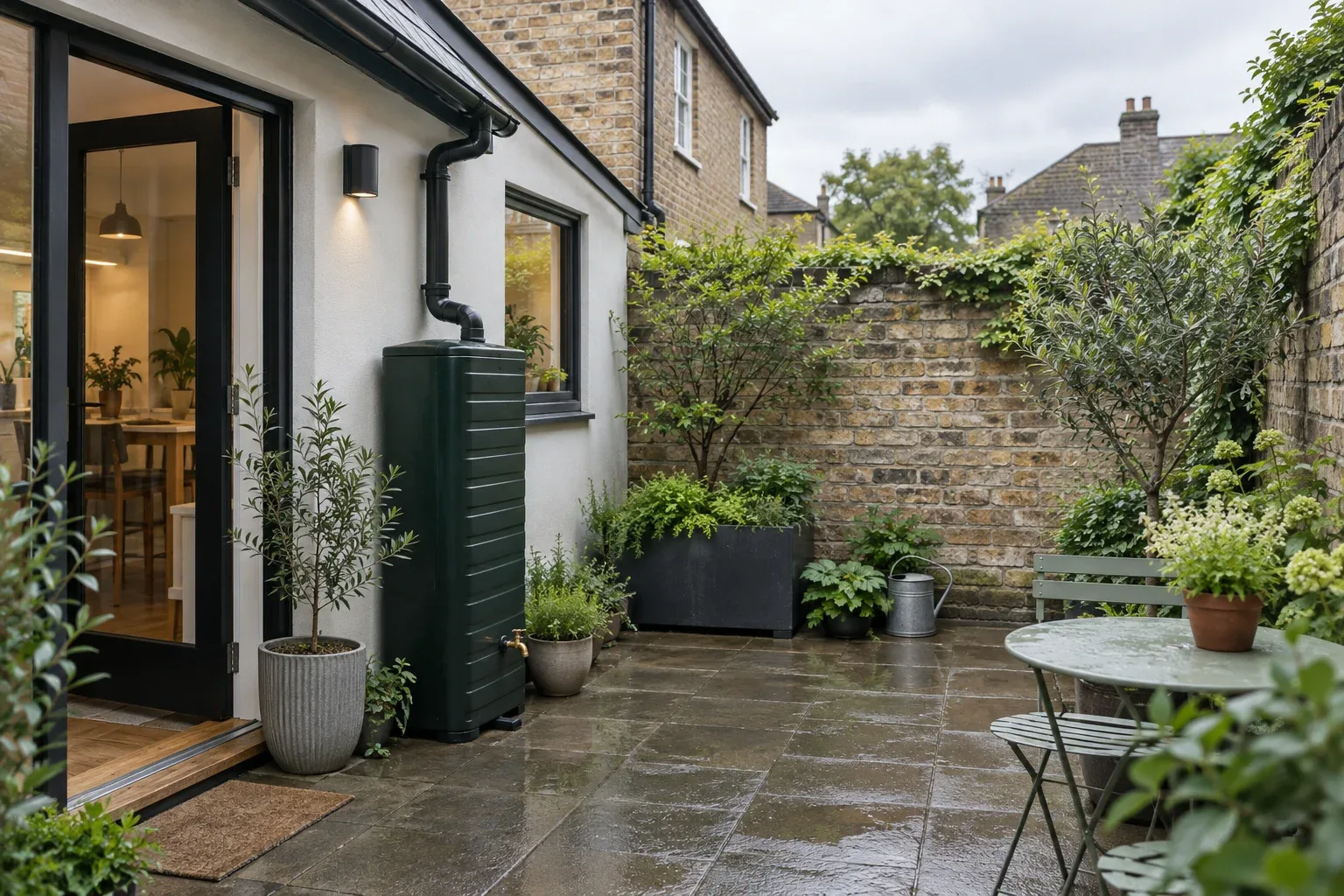
Let the use define a compact system
For a small property, accessibility and a modest, regular demand often matter more than a large annual yield. Start with the beds or containers you genuinely water. Sketch walking routes, door clearance and the hose path. A barrel that blocks access or is awkward to empty may receive rain while contributing little useful water to daily gardening.
Use only roof sections you control
A shared gutter or rented building needs the appropriate permissions before alteration. Measure the roof footprint feeding the proposed downpipe and check whether water currently serves another drainage arrangement. Small scale does not remove the need for a safe overflow. Choose a location that allows maintenance without moving a full container or reaching through a narrow inaccessible gap.
At 20 L per day, the retained 200 L covers ten rainless days.
25 m² × 15 mm × 0.80; an empty 200 L barrel.
Size around one practical cycle
An illustrative 25 m² roof receiving 15 mm rain with a capture factor of 0.80 yields 300 litres. A 200 litre barrel empty at the start can retain 200 litres and must pass the remaining 100 litres onward. At a measured demand of 20 litres per day, that retained supply covers ten days without further inflow. This is a volume scenario, not a weather forecast.
Compare one barrel with linked containers
Two linked 200 litre containers offer more capacity but require room, suitable supports and reliable interconnections. They do not automatically double savings. If use between storms is only 80 litres, an additional container may rarely be drawn down. Record several filling and watering cycles before expanding; the log reveals whether lack of storage or lack of demand is the constraint.
Plan safe operation in limited space
Secure lids, protect openings and keep routes clear. Verify the support rather than resting a heavy barrel on improvised loose materials. Check the outlet at its lowest usable level because gravity delivery weakens as the surface falls. If freezing is possible, follow product-specific winter instructions; a compact system should remain straightforward to inspect and shut down.
Small-home checklist
- Confirm ownership or permission.
- Measure connected area.
- Estimate a real watering cycle.
- Allow door and maintenance clearance.
- Verify support for filled weight.
- Test low-level outlet flow.
- Route overflow away from vulnerable structures.
- Expand only after observing actual use.