 WaterCalcLab
Rainwater Savings Calculator
Bound potential mains replacement by both available rainwater and eligible demand in the same period.
Your result
Bars compare only results in the same unit group. They are normalized, not a time-series forecast.
Planning result based on your inputs.
How this tool works
Bound potential mains replacement by both available rainwater and eligible demand in the same period.
replacement = min(supply, demand); saving = replacement/1000 × priceExample calculation
The prefilled form is a worked example. Its base-unit inputs and expected outputs are shown below; use the reset button to restore it.
| Input | Example |
|---|---|
| Available supply in the same period | 15000 |
| Demand in the same period | 20000 |
| Avoidable volumetric price | 3 |
Frequently asked questions
How should I choose the inputs?
Use measurements and local records for the stated period. All preset values are illustrative examples, not recommendations.
What does this result leave out?
This upper bound ignores seasonal mismatch and overflow. Enter realized usable supply where possible. Fixed charges and non-avoidable sewer charges remain.
Continue your plan
Water Cost Calculator
Calculate a single volumetric tariff plus a fixed charge in the same billing period.
Open calculator ↗Costs & savingsRainwater ROI Calculator
Estimate simple annual payback using eligible annual demand and actually available annual supply.
Open calculator ↗Costs & savingsAnnual Water Savings Calculator
Calculate annual replacement potential for a specified number of active days. Enter annual usable supply.
Open calculator ↗Related reading
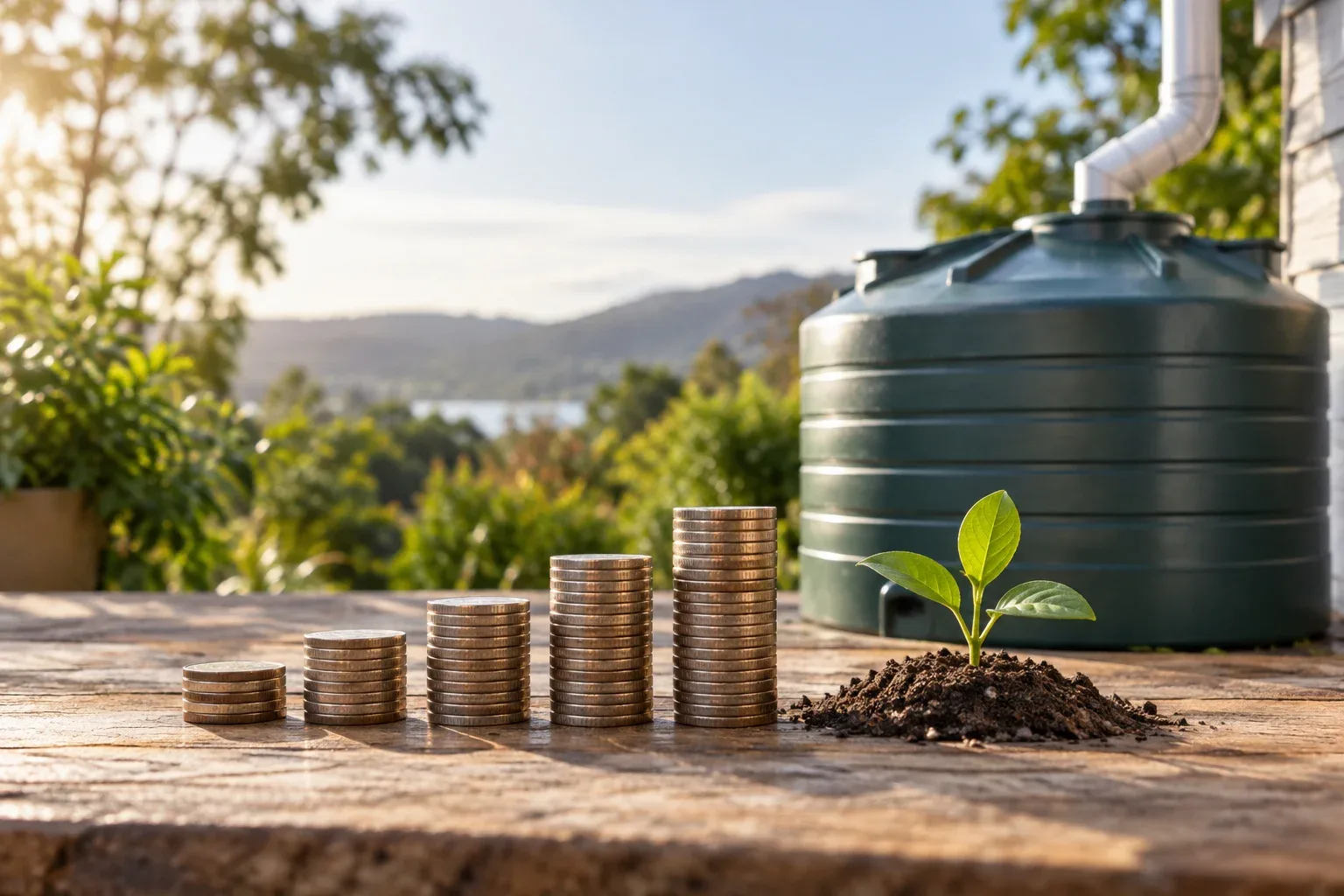 Costs & savings
Rainwater System Payback Period
Simple payback divides initial investment by annual net cash savings. Net means avoided consumption charges minus relevant recurring costs. Gross roof collection is not an annual cash saving. Estimate water that actually replaces billed use, check the applicable tariff and keep assumptions dated. The calculation is a planning scenario, not a guaranteed investment return.
Read guide ↗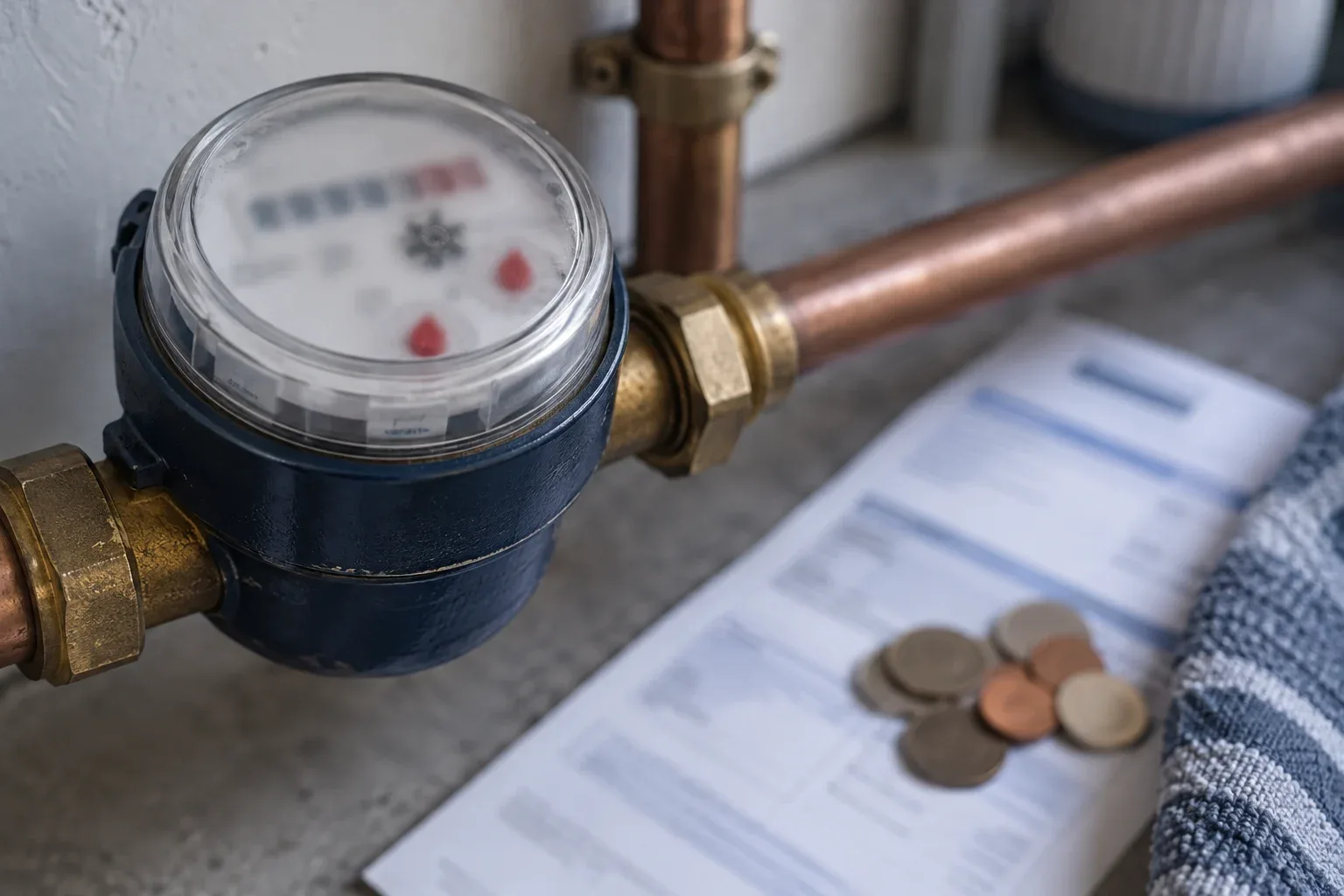 Costs & savings
Understanding Water Costs
Find billed volume, billing period, volume units, fixed charges and the consumption-dependent tariff. Check whether water and wastewater appear separately. Utilities can use cubic metres, gallons or other billing units. Convert the volume first, then calculate cost. A bill total divided by volume may be an average paid rate, but it is not necessarily the rate avoided by using one less unit.
Read guide ↗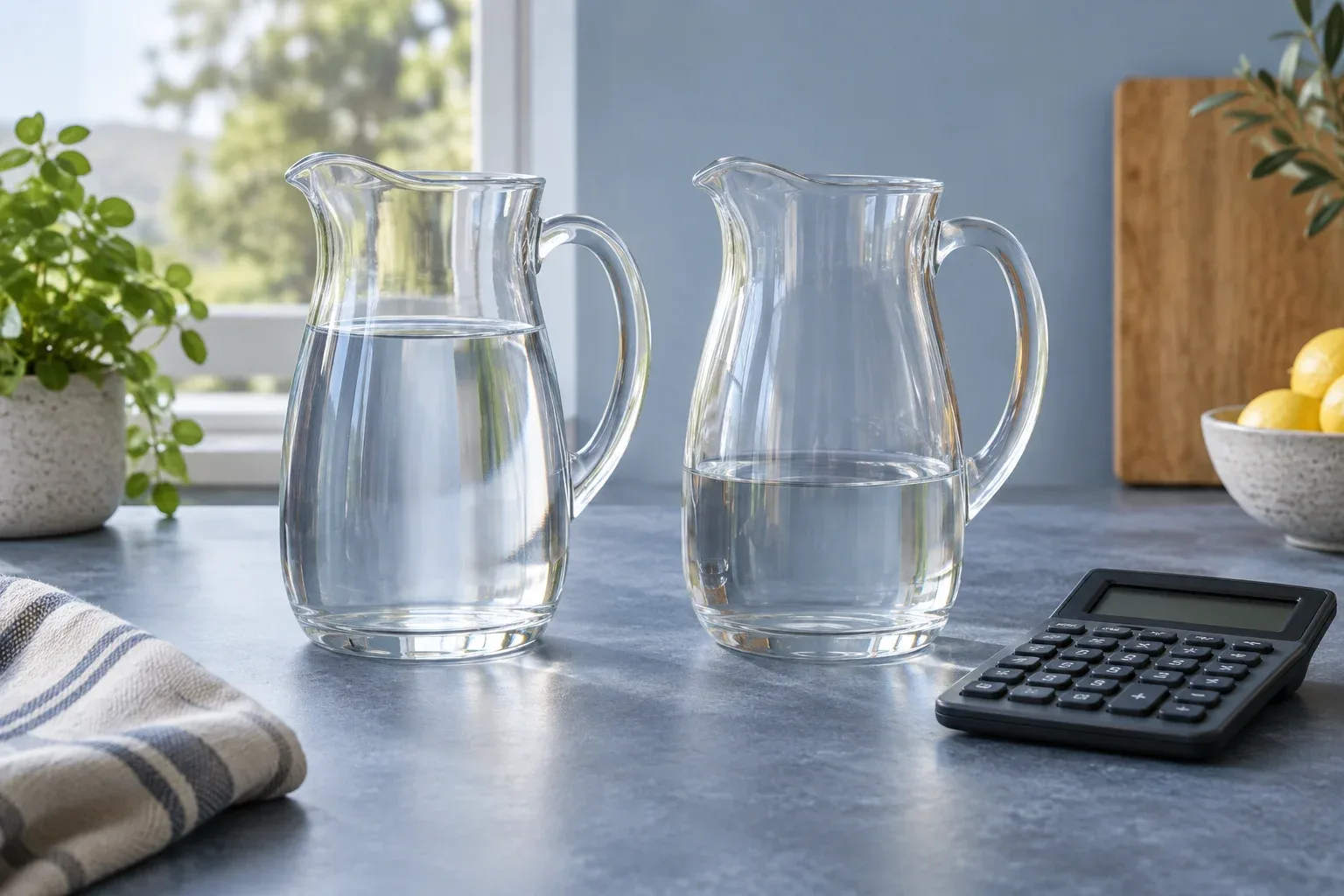 Costs & savings
How to Calculate Water Savings
Decide whether savings mean less utility water, less total water used or lower expenditure. Rainwater substitution can reduce utility demand without reducing total garden use. More efficient irrigation may reduce both. Keep these measures separate so one benefit is not counted twice. Describe the baseline and the proposed change before presenting a percentage.
Read guide ↗Sources & method references
Method version 1.0 · Last reviewed: 2026-10-10